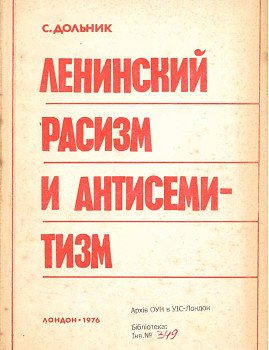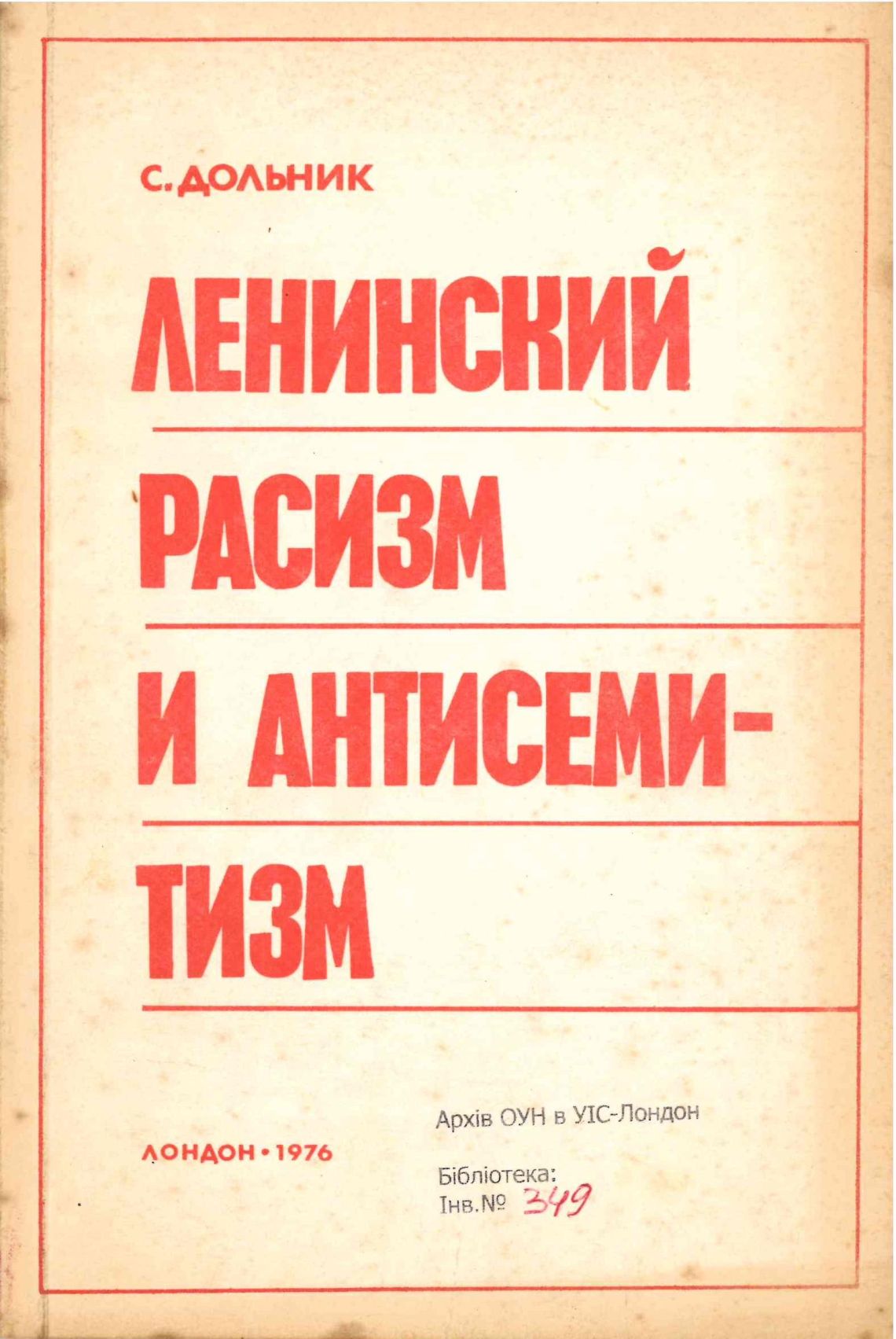
[Ukr.]"Ленинский расизм и антисемитизм" — це гостра, полемічна праця Соломона Дольника, у якій автор кидає виклик канонізованому образу Владіміра Леніна як "безкомпромісного борця проти національного гноблення". Дольник аналізує тексти, листування та політичну практику большевицького режиму, стверджуючи, що за деклараціями інтернаціоналізму приховувалися імперські підходи, зневажливі оцінки «малих» народів і вибіркове ставлення до єврейського питання.
Окрему увагу приділено суперечності між проголошеним правом поневолених народів на самовизначення — аж до відокремлення — і реальною політикою централізації та силового утримання територій колишньої імперії. Автор наполягає, що большевицька модель «визволення» часто оберталася новими формами залежності, а риторика рівності слугувала інструментом політичного контролю.
Це книжка не про абстрактні теорії, а про боротьбу інтерпретацій: вона провокує, сперечається й змушує по-новому подивитися на витоки радянської національної політики та на роль Леніна в її формуванні.
[Eng.]"Lenin’s Racism and Antisemitism" is a sharp, polemical work by Соломон Дольник in which the author challenges the canonized image of Владимир Ленин as an uncompromising opponent of national oppression. Dolnik examines Lenin’s writings, correspondence, and the political practices of the Bolshevik regime, arguing that behind declarations of internationalism there often lay imperial reflexes, dismissive attitudes toward “small” nations, and a selective approach to the Jewish question.
Particular attention is given to the contradiction between the proclaimed right of oppressed peoples to self-determination — up to and including secession — and the actual policy of centralization and the forcible retention of the former empire’s territories. The author maintains that the Bolshevik model of “liberation” frequently resulted in new forms of dependency, while the rhetoric of equality served as an instrument of political control.
This is not a book about abstract theories but about a struggle of interpretations: it provokes, challenges, and compels the reader to reconsider the origins of Soviet national policy and Lenin’s role in shaping it.